



Roman Facade Stone: The Expression of Classical Art in Contemporary Architecture
Bridging the Past and Present through Stone Facade Design
The Roman facade, rooted in the grandeur and magnificence of the ancient Roman Empire, has been revived in modern architecture not as a mere historical imitation, but as an authentic and contemporary expression of classical aesthetic principles. Emphasizing golden proportions, symmetry, rich detailing, and a sense of timelessness, this architectural style continues to bestow buildings with a distinctive and prestigious identity. In contemporary architecture across Iran and the world, the use of Roman facade stone reflects an appreciation for authenticity, quality, and long-term value. This article explores the various aspects of applying Roman stone facades in modern buildings.
Design Philosophy and Key Characteristics
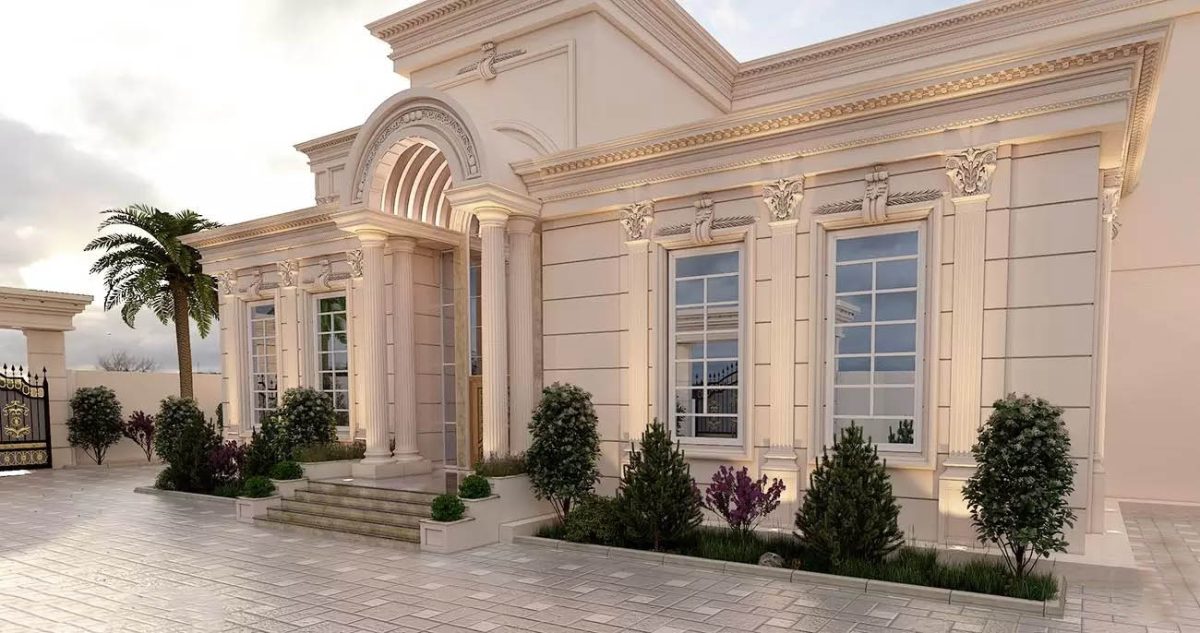
Roman facades are based on precise geometric principles and visual balance. Their defining elements include tall columns with decorative capitals—particularly Corinthian, Ionic, and Doric styles—perfect semicircular arches, projecting cornices with complex profiles, and finely carved stones featuring vegetal, human, or geometric motifs. Order, grandeur, and structural strength are clearly expressed in this style. Today, these elements can be used either fully or selectively—such as simplified columns or cornices alone—to maintain a classical atmosphere while remaining compatible with modern construction and lifestyles.
Stone Selection: The Core of Roman Facades
Choosing the right stone is crucial to the success of a Roman facade. Travertine is among the most popular options due to its warm color spectrum (from cream to brown), porous texture reminiscent of historical monuments, and excellent workability for carving and antique finishes. Marble is often used for special sections and decorative highlights to create a luxurious appearance. Granite, with its high durability, is ideal for column bases, stairs, and high-impact areas. Limestone, featuring light tones and good formability, is also an excellent choice for bright and elegant Roman facades. Achieving harmony in color and texture among the selected stones—and with the building as a whole—is the key to a successful design.
Advantages of Roman Facades in Modern Buildings
From an aesthetic perspective, Roman facades instantly attract attention and create a prestigious, distinctive identity for buildings. Economically, they significantly increase property value and enhance competitiveness in residential and commercial markets. Such facades appeal to clients seeking authenticity, quality, and classical elegance. Psychologically, Roman-style buildings convey a sense of security, stability, trust, and rootedness. Moreover, the inherent durability of natural stone combined with robust design ensures long service life and minimal need for major repairs.
Integrating Roman Facades with Modern Architecture
One of the most appealing aspects of Roman facades today is their ability to blend harmoniously with modern materials and architectural elements. For example, the base, cornices, and central sections of a facade can be executed in Roman stone, while upper floors or side sections incorporate curtain wall glazing or composite panels. Modern linear lighting can highlight columns and cornices, while large aluminum-framed windows can be positioned behind stone arches. This hybrid approach reduces visual heaviness and allows designers to benefit from contemporary materials and technologies.
Execution Process and Technical Considerations
Successful implementation of a Roman facade requires precise planning, detailed design, and skilled contractors. The first stage involves preparing detailed execution drawings and slope calculations. Next, the installation method—wet or dry—is selected. Dry installation systems, using metal anchors and rails, are now more common due to faster execution, rear ventilation, and greater flexibility against minor structural movements. Thermal and moisture insulation, proper drainage systems for rainwater, structural calculations to support stone weight (especially for large columns and cornices), and high-quality joint sealing are all critical technical factors.
Cost, Maintenance, and Durability
Roman facades generally involve higher initial costs due to complex designs, premium stones, carving, and specialized labor. However, this expense should be viewed as a long-term investment that significantly enhances property value. Costs can be optimized by using locally sourced stones or concentrating Roman elements on key focal areas of the facade. Maintenance is relatively simple, consisting mainly of periodic washing with non-acidic cleaners and annual inspections of joints and fixings. With proper care, a high-quality Roman facade can maintain its beauty and strength for decades.
The Future of Roman Facades in Contemporary Architecture
Emerging Trends:
-
Minimal Roman facades with simplified lines
-
Integration with modern lighting to emphasize details
-
Use of recycled stone with a classical appearance
-
Digital design techniques for creating new patterns
Sustainability and Roman Facades:
-
Improved energy efficiency through integrated insulation systems
-
Use of responsibly quarried stone
-
Long lifespan reducing the need for frequent renovations
-
Recyclability of stone at the end of a building’s life cycle
Conclusion: Choosing a Timeless Identity
Roman facade stone is more than a surface covering; it is an artistic and architectural statement rooted in history and alive in the present. This choice reflects a commitment to quality, authenticity, and lasting value. In today’s fast-paced world, where many buildings appear uniform and temporary, a Roman facade conveys stability, identity, and a strong sense of place. Through intelligent design, appropriate material selection, and professional execution, this classical style can be seamlessly adapted to modern residential, commercial, hospitality, and public buildings—creating spaces that are elegant, dignified, and enduring.